Contrasting Refutations of Political Correctness

Political correctness seems to be the boogeyman of this campaign, a sworn enemy of candidates and voters alike. This election season is a great time to look at what that means, since we have two opposing characterizations of what it looks like to abandon political correctness: Donald Trump and Bernie Sanders. Let’s use these cases to study how getting away from political correctness can be done to the benefit of democratic dialogue. Both candidates consistently and unapologetically say bluntly what traditional politicians would delicately tiptoe around. The difference is, Sanders is speaking hard truths about our society that we often don’t like to admit or deal with, while Trump is voicing racism, over-simplification, and misconceptions.

Before getting into this, let’s define political correctness. For the purpose of this discussion, I’m defining it as when politicians avoid speaking openly and honestly about issues for fear of offending someone, or because their beliefs may not be the most politically advantageous stance. This means Republicans shying away from talking about immigration because maybe a voting block is anti-immigration but their funders benefit from cheap illegal labor. Or it means Democrats being hesitant to talk about how to reduce income inequality because the way to do it would be objectionable to their major donors. Political correctness here refers to the way politicians skirt the tough subjects, the hard realities, in order to win votes and funding relying on easy crowd-pleasing slogans. It has become the way the game is played.

Now, with that definition, let’s say we agree that we don’t like political correctness. We want politicians to speak their truths, so we know who they are and what they’re about, instead of just knowing what they think we want to hear. However, if we agree that we don’t like political correctness, can we agree that we still want correctness? Can we appreciate that someone is being honest with us without ignoring the substance of their honesty?

Donald Trump uses political correctness as a scapegoat, a firewall against criticisms of his absurd and often factually inaccurate comments. Instead of having to respond to the realities of why it is an abhorrent idea to impose a ban all Muslims from entering into the United States, Trump has been able to rally more supporters with the bravado of claiming he’s the only one brave enough to take on the “PC Police”. To many who would potentially vote for him, this is enough to distract from what are very real, very strong arguments against this proposal. We saw a similar story line play out when Trump called Mexican immigrants rapists, and accused Megyn Kelly of only asking him tough questions because she was on her period. People should be revolted by these comments not because he said them bluntly, in a non PC way, but because they’re ignorant, bigoted, and just plain stupid.

Now, in a way, it’s a good thing that Trump is willing to say these things. At least we know what’s on his mind, when other candidates may have similar ideas that they refrain from stating. For example, it’s entirely possible that Cruz actually agrees with Trump, but is just a sly politician who knows better than to say it. However, that benefit goes away when we celebrate a lack of political correctness rather than express dismay over horrendous ideas.

A step across the aisle to the rogue Democratic candidate shows us the right way to denounce political correctness. Although he hasn’t made it a cornerstone of his campaign the way Trump has, Sanders has run a campaign that relishes in the politically unpopular. Sanders wants to “break up the largest financial institutions in the country”, dramatically increase taxes on wealthy individuals and corporations, and create a socialized health care system. In the traditional political game, these are all almost unspeakable things. Sure, establishment Democrats have long been saying we need to close corporate loopholes in the tax code and reign in on reckless financial activity, but they always do so in a way that tries to paint it as still good for the businesses themselves. And yes, it’s a popular election claim that we should have a progressive tax system, but it’s always clouded in phrases about prosperity and the American Dream. Even in the health care conversation, where Obama has made it abundantly clear that he wants every American to be insured, he has made progress only with a heavy emphasis on his plan being based on the private market.

Bernie’s ideas aren’t really what’s revolutionary about his campaign. What is revolutionary is his abandonment of the game of political correctness in favor of speaking openly about his goals. Bernie’s non-PC style is to engage with the politically difficult, and speak the hard truths. Economic inequality will not be ameliorated without higher taxes on the wealthy. Health care will not be universal while it’s still privatized. These realities have elevated the conversation, forcing Clinton to engage with the complexities of today’s issues rather than sticking to the broad, pleasant strokes of a typical campaign. In comparison, Trumps non-PC style has brought the GOP primary into a downward spiral that ignores reality, celebrates bigotry and bravado, and emphasizes drama over substance.

I don’t think we can blame political correctness for all of our woes, as some have tried to do. On the other hand, I think we stand to gain a lot by embracing the honesty and openness characterized by Sanders. I also think we are poised to make a tremendous mistake by letting Trump blame political correctness for backlash against him, when really it’s just reason and thoughtfulness that causes us to be revolted by him.
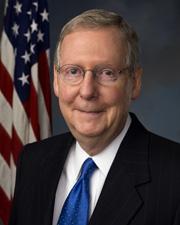
McConnell’s Supreme Gamble

The Republicans are taking a pretty big gamble in promising to block any nomination Obama makes to replace Justice Scalia. They’re not only betting that their party will win the presidency, but also that this action won’t lose them the election. I don’t think it’s a smart gamble.

The reasoning behind this obstructionist stance makes sense on the surface level. If the next president is a Republican, then presumably waiting for that president to take office will result in a more conservatively favorable addition to the Supreme Court. But given the status of the campaigns right now, it’s not at all more likely that we have a Republican for our next president than a Democrat. And if we do have a Democrat, it might be Bernie Sanders, who is sure to nominate someone much less moderate than Obama’s likely choices. Furthermore, if the Republicans win The White House, we might have a President Trump, a wildcard who has real potential to do more harm than good to the Republican party. The last thing Republicans should want is a Supreme Court Justice with a life-long term as a perpetual reminder of Trump’s presidency. A Supreme Court seat is a high-stakes bet on a non-Trump Republican being the next president.

In addition, this high profile refusal to perform essential Congressional duties has the potential to sway voters away from Republican candidates in November. While the Republican base loves when McConnell and his peers do things like this to prevent Obama from getting anything done, the more moderate majority of America is less on board. And Republicans can’t win in November if only their radical base votes for them. Remember the last government shutdown? It did not go over well with the voters (across the political spectrum), who are tired of our government’s refusal to govern. The Republican party left that battle with a bruised image, while Obama’s approval remained fairly constant. If Republicans want to win in November they can’t afford to lose the moderate American voter, who is already frustrated by gridlock and ineffectiveness. The choice, therefore, to blatantly and overtly promise inaction on such an important job is politically perplexing, to say the least.

Finally, a standoff on the Supreme Court this year would bring about an intense focus on some issues that Republicans might be better off not talking about. The Court is slated to hear a case about a Texas law that has severely restricted access to safe and legal abortions in the state. At a time when Republicans are losing ground with female voters, heavy coverage of the party’s anti-abortion stance may not be politically beneficial. Especially given that almost 30% of Republican voters think abortion should be legal in all or most cases.* Republicans would be better off this year if the focus were on national security, gun control, and the budget deficit, all issues on which American voters view Republican leadership more positively.

McConnell’s statement, made only an hour after Scalia’s death was announced, was disheartening. It’s frustrating that he believes Obama doesn’t have the right to exercise his responsibilities as president, and that our government is at a point where such overt opposition to effective governing is acceptable, and not even particularly surprising. Republicans are taking a big risk here, one that could cost them for decades to come as it has implications for the 2016 presidential and congressional elections, as well as a Supreme Court seat. It might have been more politically savvy to quietly work with Obama to get someone reasonable approved quickly. That way Republicans could have gone back to their campaigns and talking about what their voters want to hear.

*Note: although the article linked here is titled “Support for Legal Abortion Falls Sharply Among Conservative Republicans”, the data in the table shows that out of Republicans as a whole, 28% believe abortion should be legal in all or most cases.

Should a Revolutionary be President?

Is the presidency too weak an office for Bernie Sanders’s mission?

In my last post I asked: “Does real progress come from a president who knows how to work the system, or does it come from a president who thinks they can change the system?” Now, I want to change my question. I want to ask if real progress will come from the president at all.

Let’s think about how change happens in America. The American government was designed for slow, incremental change by a people scarred by the strength and power of an oppressive government. The president has a fair amount of power, but as we all learned in elementary school, it’s checked and balanced. And today, it’s checked by a legislature comprised by two teams of people who hardly even speak to each other. It’s balanced by an overburdened court system that often takes years to take on major cases.

Much of what Sanders wants to do reflects a new New Deal. This term isn’t quite as in vogue as it was in the last few elections, but he wants a better and stronger safety net. When Franklin D. Roosevelt was president, his visions were largely supported by a congress that recognized the need for dramatic changes to pull the country out of the depression. Are you wondering if we have a congress today that recognizes this need? If so, you need only harken back to Mitch McConnell’s promise on Obama’s first inauguration day: “Our top political priority over the next two years should be to deny President Obama a second term.” Our top political priority. That attitude hasn’t changed over the last eight years. Our congress is still more focused on preventing the other party’s successes than it is on anything else. And Sanders won’t change that.

Today, I don’t think we’re a country that will see revolutionary change from the oval office, no matter who sits in it. We’ll see pushes in one direction or another from the White House. But the rainbow flags flew when the Supreme Court made a ruling, not when Obama appealed for marriage equality. Today, we’re a country where real change happens in the courtroom rather than the legislature, and we’ve always been a country where change happens in the streets even before the courts start to listen. What caused desegregation? The same court that will eventually enact the reforms Sanders so passionately argues for.

I’d love to see Sanders in a position where he can lead a revolutionary movement, rather than an army and a congress of red and blue pawns. He can leave those exercises for the career politicians.

Optimism After the Democratic Debate

I’m feeling optimistic. Watching Hillary Clinton and Bernie Sanders on New Hampshire’s national stage, I saw two smart, thoughtful people engaging in a substantive debate. Don’t get me wrong, I didn’t miss the bumper sticker politics moments, the repetition of Bernie’s few (but resonant) campaign slogans and Hillary’s (somewhat tired)”I’m a liberal who likes to get things done” refrain. But at the base of it all was a refreshing moment of agreement. They both effectively said: this is who I am, this is who my opponent is, and you have a choice to make. They were speaking to a similar audience, and they seemed to speak largely the truth (to the best of their considerable abilities). They showed each other, and the democratic process, respect.

What makes me truly optimistic about this debate is the social backdrop. In the past few weeks I’ve enjoyed engaging and enlightening conversations about this choice in the Democratic primary. In the same week I argued for Hillary to one friend and for Bernie to another. The truth of the matter is that I have an admiration for (and a few reservations about) each of them (and, I admit, part of me is just a contrarian). Yesterday I saw an activist Bernie supporter earnestly post a query on Facebook asking people why they supported Hillary. He said he knew too many smart people supporting her to fully believe his own negative thoughts about her. And his friends answered. Some said they #feltthebern but respected this or that aspect of Hillary, and some were true Clinton supporters who wanted to show him why they felt the way they do.

I’m excited because this is the point of democracy. It’s an almost universally accepted truism that there’s no point in talking politics socially because you’re either agreeing with each other over and over, or you’re just shouting opposing things at someone who won’t ever change their mind. That idea, if true, would be deeply depressing for the fate of a democratic society. This Democratic primary is starting to prove it wrong.

The conversations I’m having and witnessing show that this Democratic primary is inspiring real dialogue about how to bring about positive change in America. Does real progress come from a president who knows how to work the system, or does it come from a president who thinks they can change the system? People who have very similar ideals are debating the best way to move us closer to them. And that’s progress in and of itself. Our dialogue is progress.

Now, I’m realistic about what the general election will look and sound like. There will be much less mutual respect among the candidates and their supporters. I’ll be frustrated by it, and most of you will be frustrated by it too. I’d love to see a general election where candidates admitted when they agreed with each other and refused to bite on juicy but empty scandals. 2016 will not be that election.

That said, the fact that a tightly contested primary like this can be handled with such grace gives me optimism about the potential for such a general election to exist. It starts with the conversations we all have with each other. The people who disagree with you have their reasons. Listen to them. Engage with them. Thank them for their thoughts. This isn’t easy, and no one does it all the time. But give it a shot. And I’m not just talking about your friends voting against your favorite in the primary. I’m also talking about your friends voting in a different primary.

Let’s depolarize. Let’s see if we can bring civility in politics back to a place of normalcy, using this debate as an example.